
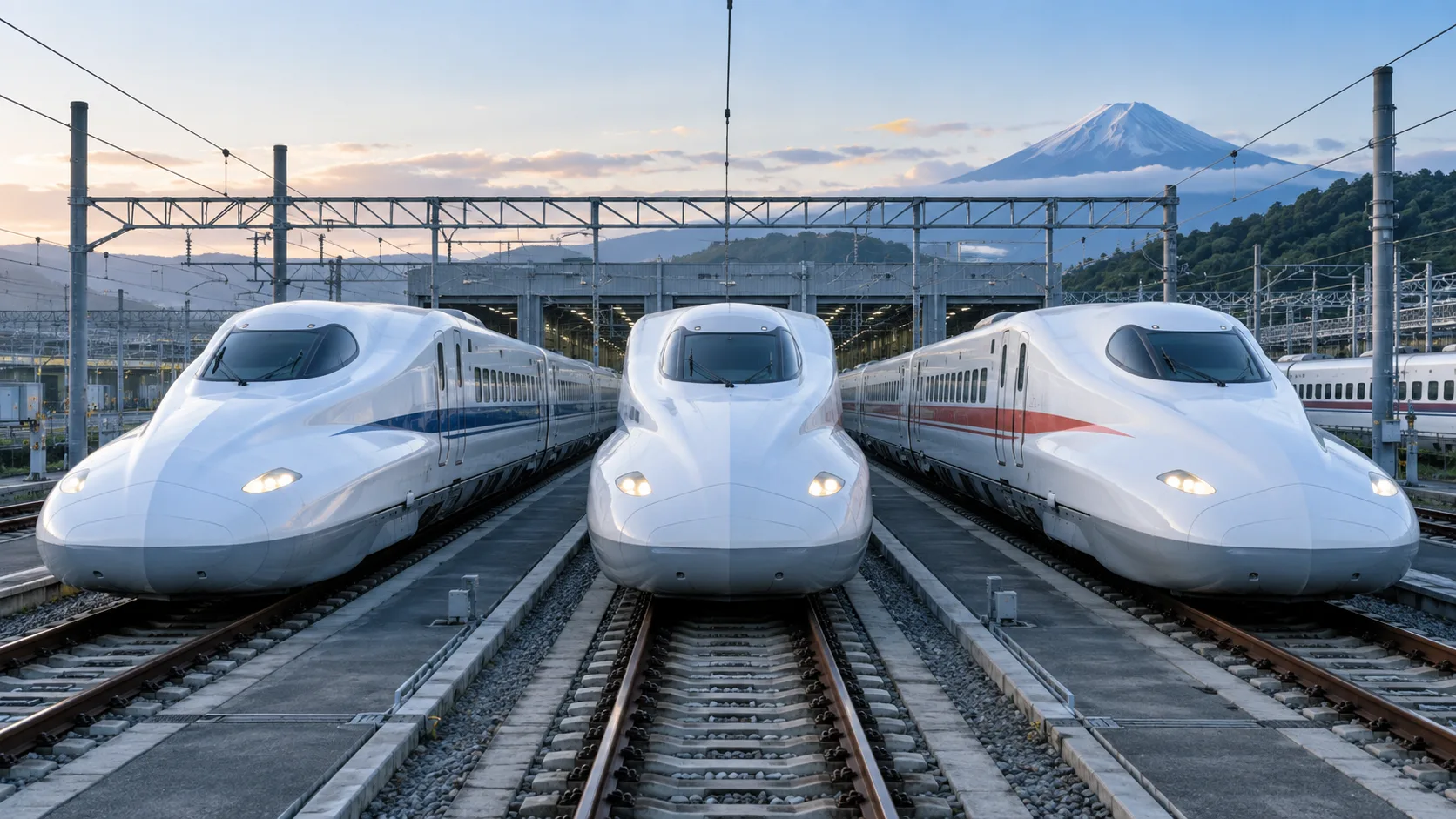
Nozomi, Hikari and Kodama are service names on the Tokaido Shinkansen. Nozomi usually makes fewer stops, Hikari serves more intermediate stations, and Kodama stops at every station on its operating section. Choose a service that calls at your actual destination before comparing speed.
Nozomi for the main city pairs
Nozomi is usually the fastest option between the major Tokaido cities, including Tokyo, Nagoya, Kyoto and Shin-Osaka. Some services continue onto the Sanyo Shinkansen. A train may stop at several major cities without serving smaller gateways such as Odawara. For a specific journey, compare the departure and arrival times shown for your date rather than using a single duration for every Nozomi.
Hikari for intermediate stops and pass planning
Hikari can serve useful intermediate stations and may suit travellers using a nationwide Japan Rail Pass without the special Nozomi supplement. Stopping patterns differ between departures, so a Hikari name alone does not prove that it calls at Odawara or another particular station. Check the full stop list before committing to an onward local connection.
Kodama for smaller Shinkansen stations
Kodama is useful when your destination is a station skipped by faster services. It generally takes longer over a large distance and may wait at stations while faster trains pass. For a short section to an appropriate gateway, it can still be straightforward. The Tokyo to Odawara guide illustrates why station coverage can matter more than the fastest service name.
Compare the actual ticket, not just the train name
Ordinary, Green Car, reserved and non-reserved options depend on the departure and product. A train name does not guarantee a particular cabin, luggage arrangement or flexible ticket. GranClass is not a Tokaido Shinkansen cabin. Check the seat guide and review the full fare and rules before paying.
Peak-period Nozomi reservations
JR Central and JR West operate Nozomi with all seats reserved during designated major peak periods. Check the operator’s published dates for your trip; do not assume a non-reserved product provides a seat on those departures. Hikari and Kodama have their own inventory and can also be busy. Travelling earlier in the day or adjusting the date may be more practical than relying on last-minute availability.
A quick decision sequence
- Confirm that the train stops at both stations you need.
- Compare the complete journey, including transfers and local travel.
- Check any pass coverage or required supplement.
- Choose an available seat and compatible luggage arrangement.
- Review the ticket’s change terms and final passenger total.
For a first trip, combine the corridor map with the pass comparison. The fastest train is useful only if it fits the rest of your journey.