
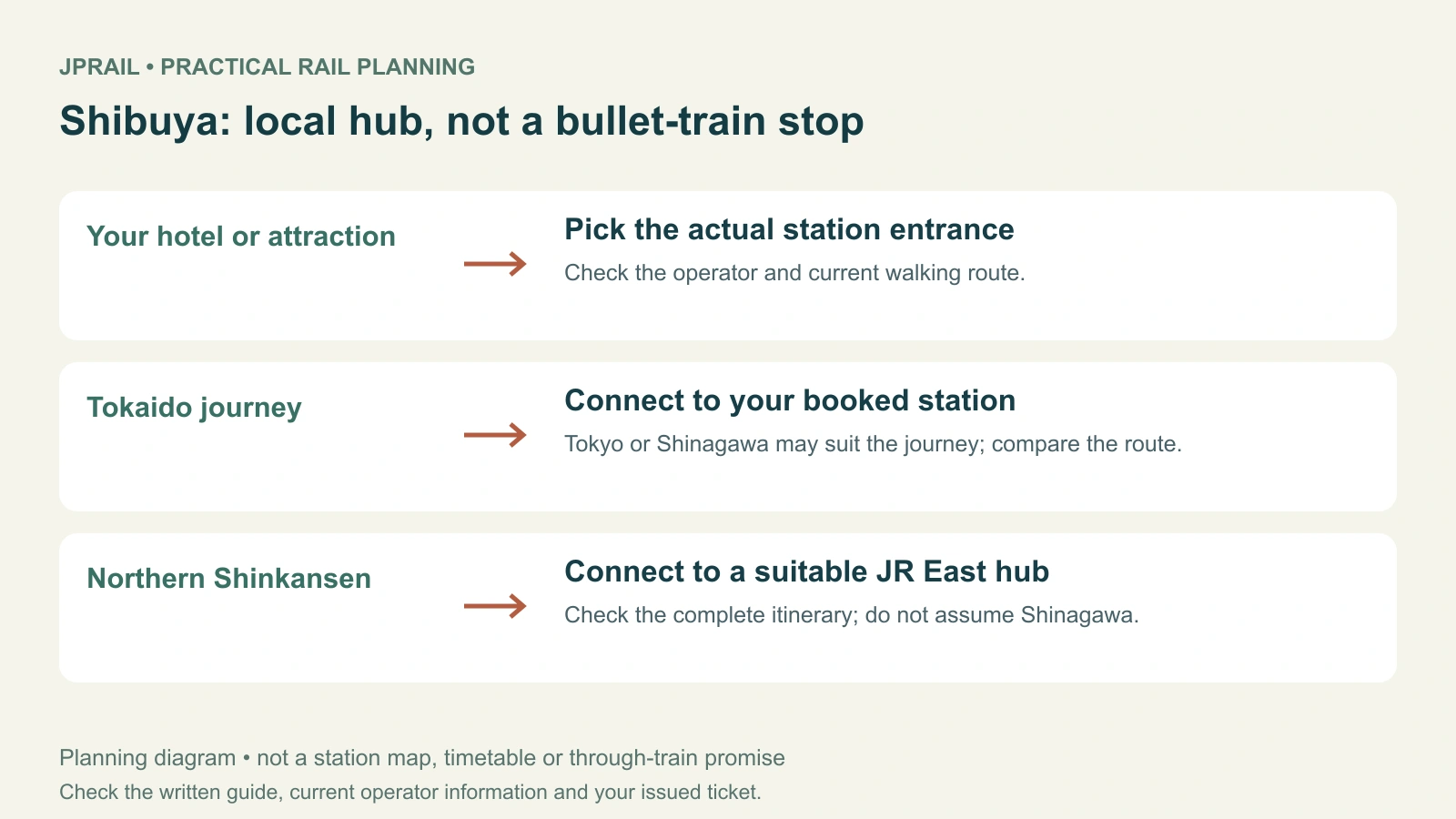
Shibuya Station is a major Tokyo interchange for JR, Tokyo Metro, Tokyu and Keio services. It has no Shinkansen platforms. For a bullet train to Kyoto or Osaka, travel to a Tokaido Shinkansen station such as Shinagawa or Tokyo first.
Start with the railway name
The JR Yamanote Line connects Shibuya with Shinagawa, Shinjuku and other Tokyo districts. Tokyo Metro operates the Ginza, Hanzomon and Fukutoshin lines here. Tokyu’s Toyoko and Den-en-toshi lines provide connections towards Yokohama and southwest Tokyo; Keio’s Inokashira Line runs towards areas including Shimokitazawa and Kichijoji. Follow the line name and symbol on the signs instead of assuming every platform is behind the same ticket gate.
Hachiko, the crossing and your hotel exit
For Hachiko and Shibuya Scramble Crossing, follow current signs for the Hachiko area. For a hotel, use its street address and recommended exit rather than choosing the busiest landmark. The station connects with large shopping buildings and underground passages, so leaving through the wrong side can add a substantial walk. Construction can change passages and access routes; save the destination address as well as a map screenshot.
Shibuya to the Shinkansen at Shinagawa
For the Tokaido corridor, a JR connection to Shinagawa is often convenient. At Shinagawa, follow Shinkansen transfer signs and confirm the train number before entering the platform area. Budget time for the local ride, the walk between platforms and any ticket collection. A local IC-card journey and a Shinkansen booking may use different gate methods. Read the issued instructions, and consult our Shinagawa Station guide.
When Tokyo Station makes more sense
Tokyo Station serves northern corridors that do not depart from Shinagawa, including journeys towards Sendai and Kanazawa. Check the actual departure station on your reservation before deciding how to leave Shibuya. Your best connection depends on the railway corridor and your hotel location, not simply which station name is more familiar. The Shinkansen map separates these corridors.
Luggage, meeting points and step-free travel
Choose a meeting point outside the busiest pedestrian flow and share its exact name. Coin lockers may be full or too small for your bags; do not make a tight train connection depend on finding one. Travellers using lifts should allow extra walking time because the most direct staircase route may differ from the accessible route. Ask station staff for the current lift connection between your two lines.
Before entering the gate
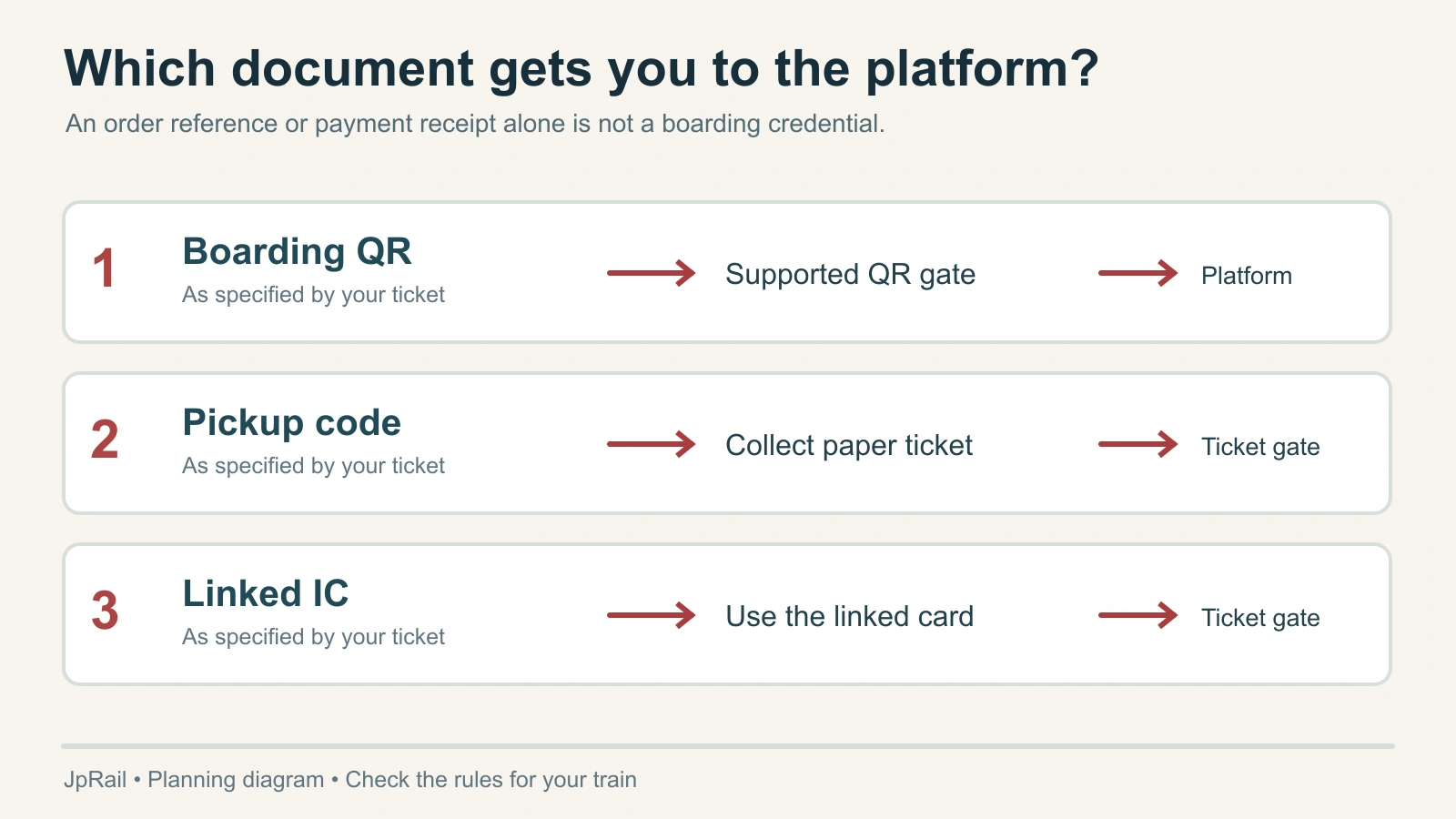
Check the operator, direction and ticket method for this leg. A stored-value card can simplify supported local travel but does not itself include a Shinkansen reservation. Keep the card used to enter the local network available at the transfer. Our IC-card guide explains the difference between local travel and long-distance tickets.
Make a two-line transfer plan before entering
Write your arrival railway and departure railway together: for example, a Tokyo Metro arrival followed by a JR journey toward your Shinkansen station. Then consult the current maps for those operators. A map pin reading “Shibuya Station” does not tell you which paid area or level to enter.
If changing to a line operated by another railway, confirm how fares and gates are handled for your ticket or card. Do not follow the first crowd toward a landmark exit if you need an internal transfer. With bags, identify the step-free route rather than assuming the staircase path shown in a journey planner suits you.
Shibuya hotel to a Kyoto-bound train
Start with the issued Shinkansen departure: Tokyo and Shinagawa are separate stations. If booked from Shinagawa, plan the local ride there, the station walk and any collection requirement. If booked from Tokyo, use that station unless the ticket conditions and seller confirm a valid alternative.
Leave the hotel with the intercity ticket and local payment method accessible. At the interchange, compare the departure time and train number with the board; the final destination may be beyond Kyoto. The local journey does not itself provide the Shinkansen entitlement. Review the boarding guide before combining a local IC card with a QR or paper ticket.
Meet someone without blocking the station
Choose a precisely named location and share a map pin, its level and the operator area where relevant. “At Shibuya” or “near the gates” can mean several incompatible places. If one person is inside a paid area and another is outside, agree who will exit before walking toward each other.
For families, choose a recovery meeting point outside moving queues and platform circulation. If someone is delayed at a gate, keep supervising children and contact the separated person rather than splitting into several searching groups. A familiar landmark can help orientation, but the hotel's recommended exit is often more relevant to the actual walk.
Allow for construction, lockers and accessibility
Current signs and station staff take priority over an old blog diagram. Save the destination address so a changed passage does not leave you dependent on one screenshot. If using lifts, confirm the accessible route for your particular pair of lines; not every transfer follows the shortest pedestrian path.
Treat lockers as a convenience rather than a guaranteed connection step. They may be full, too small or awkward to reach from the route you need. If you must retrieve bags before a reserved departure, include the return walk and a backup storage plan. Do not enter a paid area to search for a locker without checking how you will return to the correct journey.
Official planning resources
Editorial review: 10 October 2026. Check the current operator instructions and your issued product before travel.