
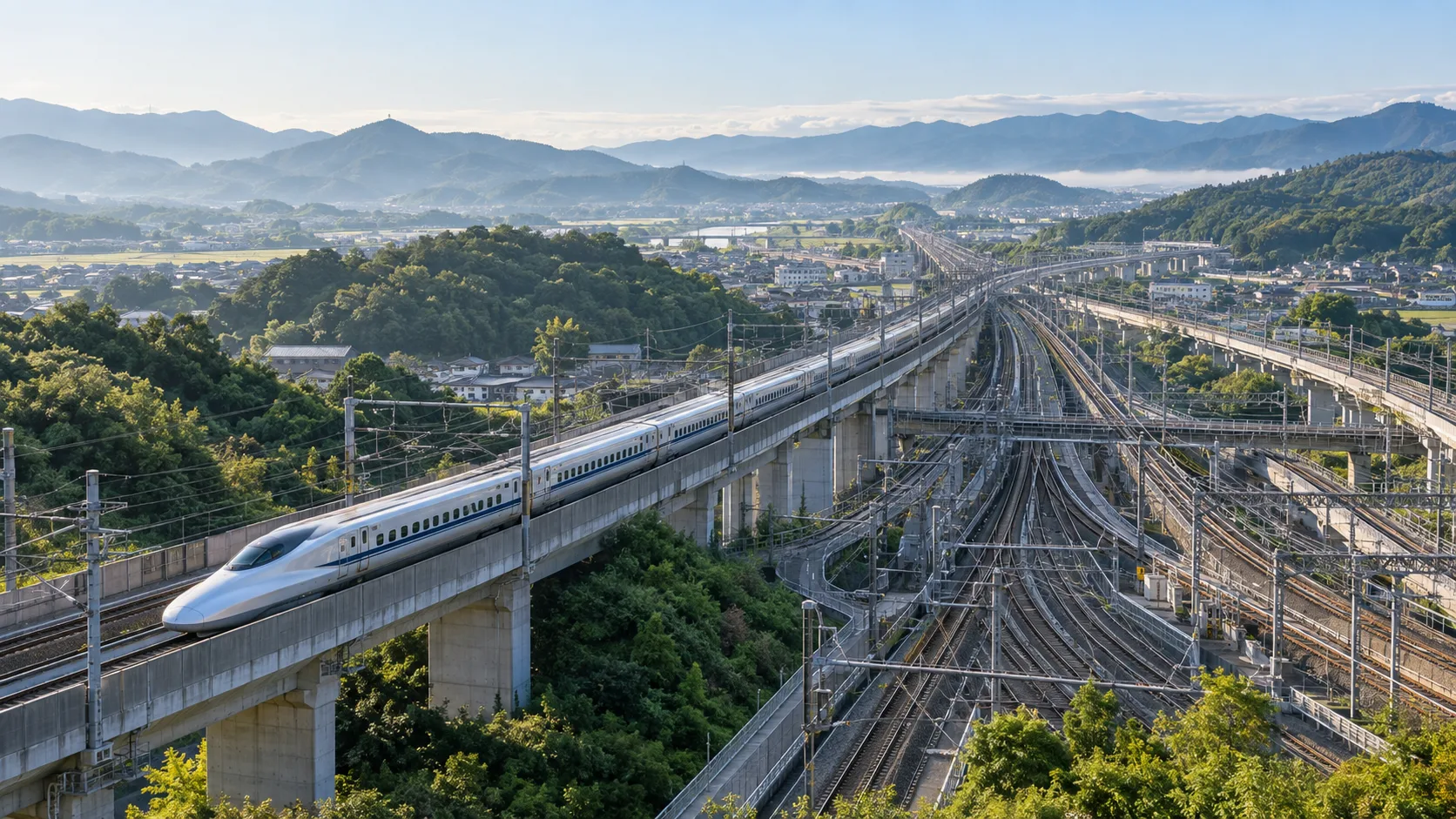
Japan’s Shinkansen network links major cities along several separate railway corridors. For Tokyo, Kyoto and Osaka, start with the Tokaido Shinkansen. Continue west on the Sanyo line for Hiroshima and Hakata, or look north from Tokyo for the Tohoku, Joetsu and Hokuriku lines.
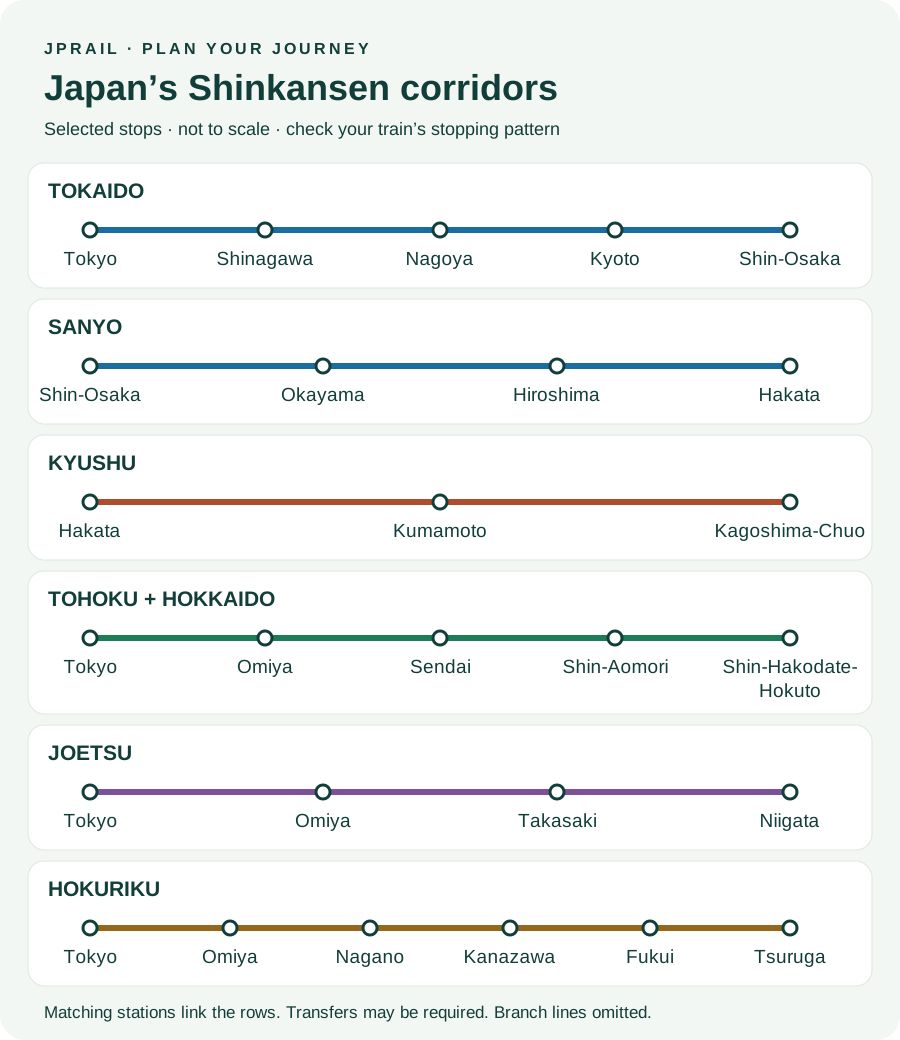
A simple Shinkansen route map
Tokyo, Kyoto and Osaka: the Tokaido corridor
The Tokaido Shinkansen runs between Tokyo and Shin-Osaka, serving places including Shinagawa, Shin-Yokohama, Nagoya and Kyoto. Nozomi, Hikari and Kodama are service names on this corridor, with different stopping patterns. They are not three separate railway lines. Use the Tokyo to Kyoto guide or Tokyo to Osaka guide to plan a specific journey.
Western Japan: Sanyo and Kyushu
The Sanyo Shinkansen continues from Shin-Osaka through Okayama and Hiroshima to Hakata, the high-speed rail gateway for Fukuoka. The Kyushu Shinkansen links Hakata with Kumamoto and Kagoshima-Chuo. Some services cross line boundaries; others require a change. The separate Nishi Kyushu Shinkansen connects Takeo-Onsen and Nagasaki and involves a conventional-line connection when travelling from Hakata. It is not drawn in the simplified diagram.
Northern Japan and the Hokuriku coast
From Tokyo, the Tohoku corridor runs north through Sendai towards Shin-Aomori, connecting with the Hokkaido Shinkansen to Shin-Hakodate-Hokuto. Sapporo requires onward conventional rail. The Joetsu line serves Niigata, while the Hokuriku corridor serves Nagano, Toyama, Kanazawa, Fukui and Tsuruga. Travel between Kanazawa and Kyoto or Osaka normally involves a change at Tsuruga. Yamagata and Akita services branch from the Tohoku corridor; these branches are omitted from this overview.
Places a bullet train does not reach directly
Narita Airport, Haneda Airport, Shibuya, Kawaguchiko and Hakone-Yumoto are not Shinkansen stations. Plan the airport or local connection separately. In Osaka, the bullet-train station is Shin-Osaka, not Osaka Station or Namba. The Mount Fuji transport guide explains why choosing the correct gateway matters.
Turn the map into a workable itinerary
Choose the exact stations, then check a timetable for the travel date. Review transfers, reservation requirements, luggage and the total fare. Pass coverage and JpRail booking availability must be checked separately from whether a railway appears on this map. Start with the ticket buying guide before reserving.