
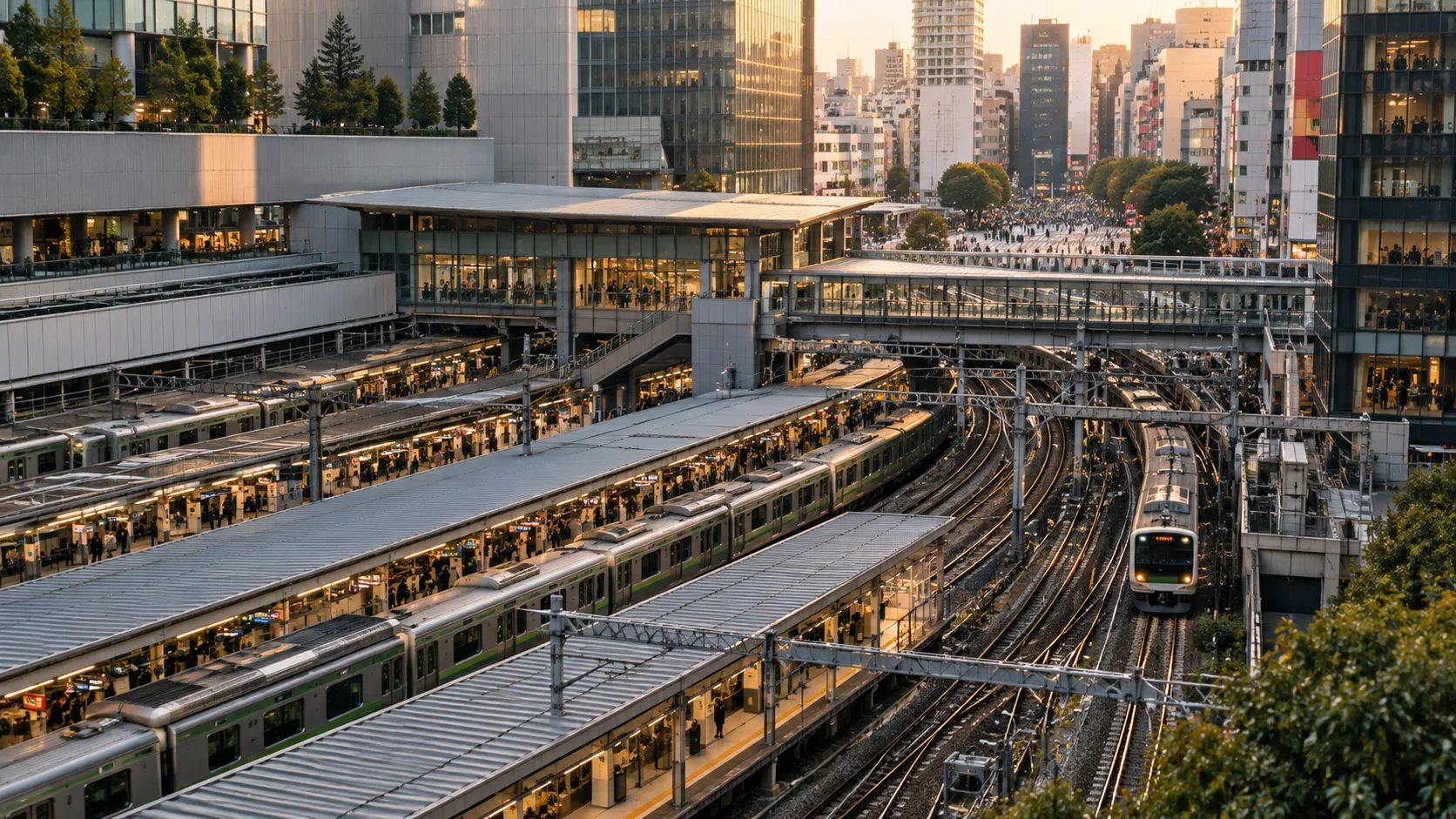
Shibuya Station is a major Tokyo interchange for JR, Tokyo Metro, Tokyu and Keio services. It has no Shinkansen platforms. For a bullet train to Kyoto or Osaka, travel to a Tokaido Shinkansen station such as Shinagawa or Tokyo first.
Start with the railway name
The JR Yamanote Line connects Shibuya with Shinagawa, Shinjuku and other Tokyo districts. Tokyo Metro operates the Ginza, Hanzomon and Fukutoshin lines here. Tokyu’s Toyoko and Den-en-toshi lines provide connections towards Yokohama and southwest Tokyo; Keio’s Inokashira Line runs towards areas including Shimokitazawa and Kichijoji. Follow the line name and symbol on the signs instead of assuming every platform is behind the same ticket gate.
Hachiko, the crossing and your hotel exit
For Hachiko and Shibuya Scramble Crossing, follow current signs for the Hachiko area. For a hotel, use its street address and recommended exit rather than choosing the busiest landmark. The station connects with large shopping buildings and underground passages, so leaving through the wrong side can add a substantial walk. Construction can change passages and access routes; save the destination address as well as a map screenshot.
Shibuya to the Shinkansen at Shinagawa
For the Tokaido corridor, a JR connection to Shinagawa is often convenient. At Shinagawa, follow Shinkansen transfer signs and confirm the train number before entering the platform area. Budget time for the local ride, the walk between platforms and any ticket collection. A local IC-card journey and a Shinkansen booking may use different gate methods. Read the issued instructions, and consult our Shinagawa Station guide.
When Tokyo Station makes more sense
Tokyo Station serves northern corridors that do not depart from Shinagawa, including journeys towards Sendai and Kanazawa. Check the actual departure station on your reservation before deciding how to leave Shibuya. Your best connection depends on the railway corridor and your hotel location, not simply which station name is more familiar. The Shinkansen map separates these corridors.
Luggage, meeting points and step-free travel
Choose a meeting point outside the busiest pedestrian flow and share its exact name. Coin lockers may be full or too small for your bags; do not make a tight train connection depend on finding one. Travellers using lifts should allow extra walking time because the most direct staircase route may differ from the accessible route. Ask station staff for the current lift connection between your two lines.
Before entering the gate
Check the operator, direction and ticket method for this leg. A stored-value card can simplify supported local travel but does not itself include a Shinkansen reservation. Keep the card used to enter the local network available at the transfer. Our IC-card guide explains the difference between local travel and long-distance tickets.