
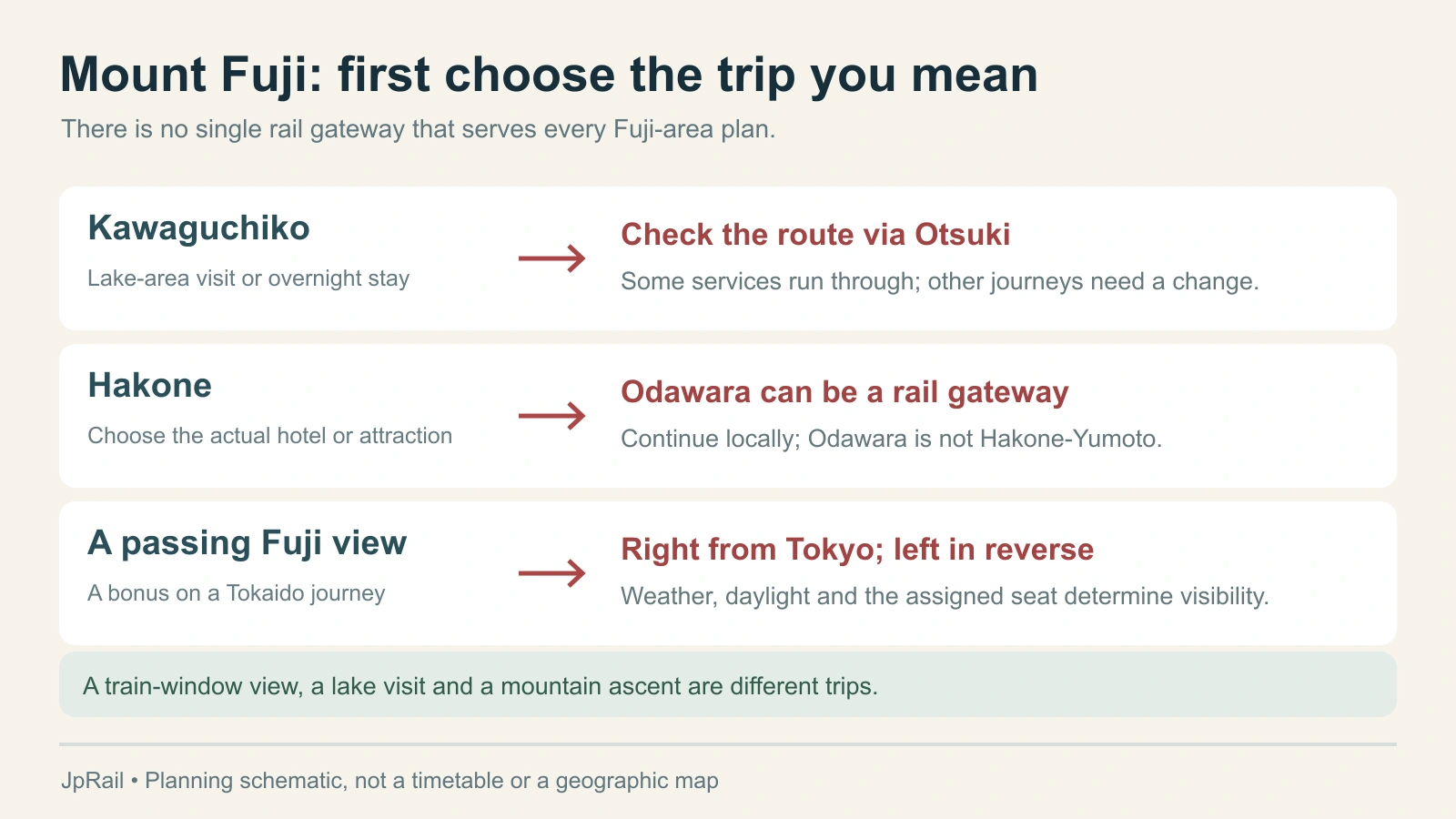
There is no single “Mount Fuji station” that works for every visit. Kawaguchiko, Hakone and the southern Shinkansen gateways serve different itineraries. First decide whether you want lakeside sightseeing, a Hakone stay, a climbing-route connection or simply a view from a passing train.
Choose one trip objective first
- Lake Kawaguchi: plan Kawaguchiko station plus local travel to a lake viewpoint or hotel.
- Hakone: identify the actual hotel or attraction, such as Hakone-Yumoto, Gora or Lake Ashi.
- A passing view: treat the mountain as a possible bonus on a Tokaido journey you already need.
- Climbing: check current official access and seasonal guidance for the intended trailhead. A rail gateway is only the start of the mountain-access plan.
Kawaguchiko: start with Shinjuku and Otsuki
For Lake Kawaguchi, rail options include selected direct Fuji Excursion limited-express services from Shinjuku, or a JR journey to Otsuki followed by the Fujikyu Railway. Neither is a Shinkansen journey. Check the date-specific timetable, seat requirements and the complete fare across the different operators. A Tokyo hotel does not mean you should automatically begin at Tokyo Station; include the connection to Shinjuku where appropriate.
Hakone: Odawara is a gateway, not the final stop
For Hakone, compare a Tokaido Shinkansen to Odawara followed by local transport with an Odakyu journey from Shinjuku. Hakone-Yumoto, Gora and Lake Ashi involve different onward journeys. Nozomi does not call at Odawara; use a Kodama or suitable Hikari. Plan the local leg before reserving the intercity train. The Odawara route guide explains the Shinkansen option.
Seeing Mount Fuji from the Shinkansen
On the Tokaido corridor, the mountain can be visible from the right-hand side when travelling towards Kyoto and Osaka, and the left-hand side when travelling towards Tokyo. Clouds, haze and darkness can hide it completely. Seat letters differ by cabin and formation, so check the relevant layout rather than relying on a universal letter. A window request is not a promise of either that seat or a clear view.
Shin-Fuji and Mishima are different gateways
Southern stations can be useful for particular bus connections or accommodation, but they do not put you directly beside Lake Kawaguchi. Compare the onward timetable and overall travel time. A station with Fuji in its name should not be treated as the best stop for every visitor. Our Fuji-area guide helps separate these destinations.
Compare the whole day, including bad-weather options
For a Kawaguchiko day, list the Tokyo-to-Shinjuku connection where needed, the railway journey, any Otsuki change, and the local trip from Kawaguchiko station. For a Hakone day, list the mainline journey to the gateway and each local connection to the chosen attraction. Compare how much sightseeing time remains after those legs.
If a clear mountain view is the main aim, choose an area you will still enjoy when the summit is hidden. Check the current operation of mountain transport before committing to a sequence with no spare time. An overnight visitor should also obtain the accommodation’s pickup or last local-transport instructions.
Build a return plan before leaving Tokyo
Look up the last suitable return from the place you will actually finish sightseeing, including a bus or local railway back to the main station. A late attraction visit can miss the connection even if a later intercity train still exists. Reserve or buy the necessary products under their conditions rather than assuming all operators accept one ticket or pass.
If you are continuing onward to Kyoto, compare that chain with returning to Tokyo first. Include luggage retrieval and any hotel pickup or delivery arrangements. Avoid carrying a large suitcase through several sightseeing transfers simply because the long-distance train can accommodate it. Keep an overnight bag and a confirmed luggage plan if that better suits the itinerary.
Check passes and ticket availability separately
A nationwide JR Pass does not automatically include the Fujikyu section or all Hakone transport. Regional products have their own conditions. Airport, local and sightseeing services described here may require booking directly with their operators. Check current availability rather than assuming JpRail sells every connection in this article. For the intercity part, consult how to buy Shinkansen tickets.
If forwarding luggage, confirm the receiving hotel, delivery date and baggage restrictions with the service. Keep medicines, valuables, travel documents and essentials with you; a proposed delivery is not a confirmed same-day arrival.
Official planning resources
- JR Central: ticket types and fares
- JR East: routes, stations and travel information
- Japan National Tourism Organization: Mount Fuji
Editorial review: 10 October 2026. Check the current operator instructions and your issued product before travel.